01
Web hosting
Host sites on distributed node resources. A single node failure does not stop the service.
An AI that turns judgment into execution, and QLI — a layer that binds scattered compute into one network. Two bottlenecks, one principle.
INDLE's model was not built to answer questions. It was built to read news, verify sources, score risk, and place orders at the right moment. Of 14B parameters, 3B activate — compute concentrates on the decision at hand.
RAG supplies current market context. Fine-tuning encodes trading judgment. Together they turn sentiment into execution.
Collect real-time news, filings, and market data.
Cross-check media and sources for reliability.
Calculate risk and directional probability.
Apply automated capital-protection rules.
Place orders without missing the window.
Good analysis is common. The hard part is turning it into an order. INDLE binds judgment and execution into one pipeline, leaving less room for hesitation.
Failure is part of the system. When a loss occurs, defense protects capital, and the cause is fed back into training — reducing repeated mistakes structurally.
On a failed trade, automated defense protects capital. The cause becomes training data.
A general chat model is not the starting point. The structure is optimized for trade decisions and execution.
RAG joins the latest news and market conditions at the moment of judgment.
Signals are filtered by the quality of their source, not the volume of information.
The pipeline runs from probability to order, not from prompt to paragraph.
Defense results return to training, reducing the repetition of the same mistake.
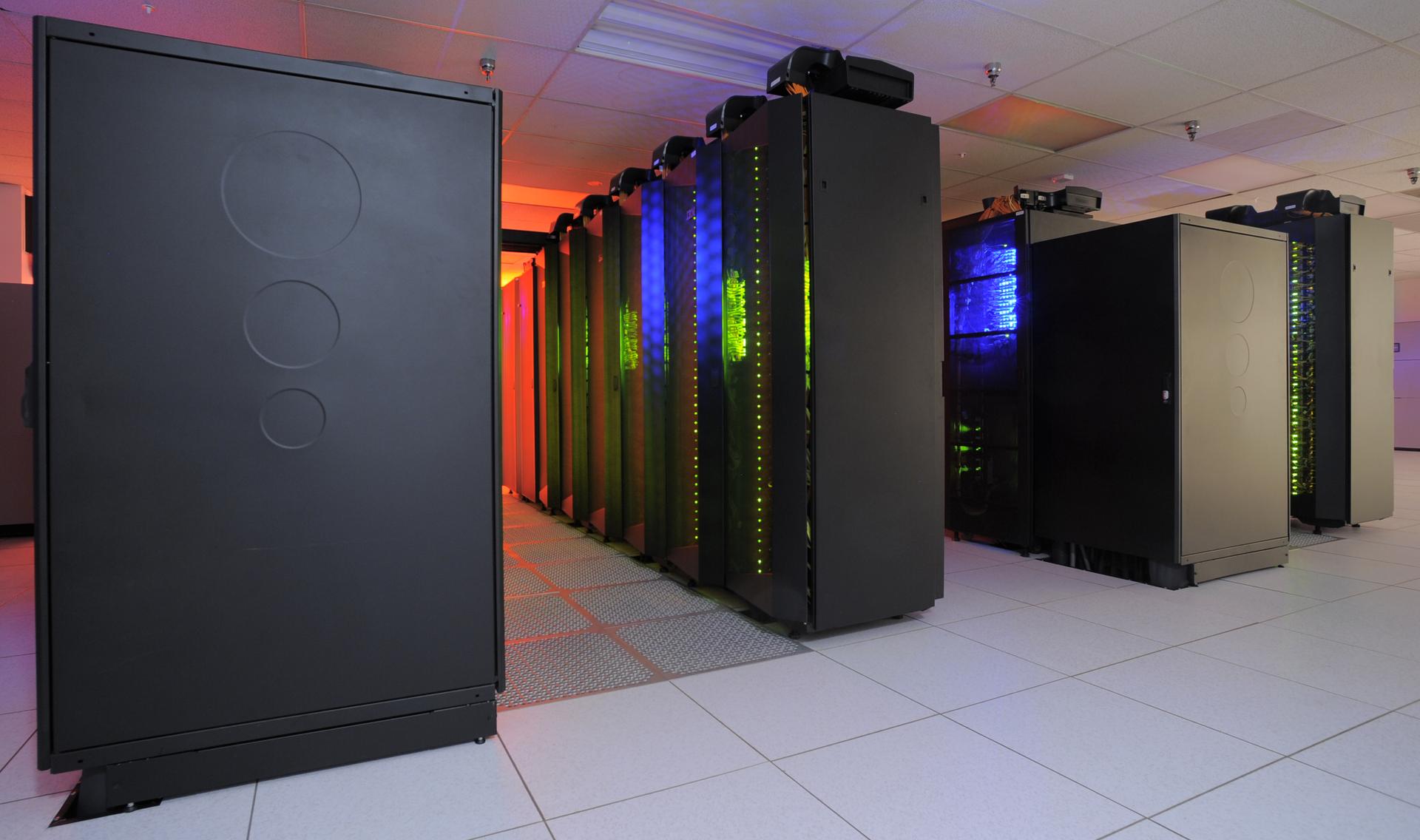
QLI binds scattered compute into one layer, turning it into infrastructure for web hosting and web servers. Idle resources become a foundation, not a cost.
A low-spec computer is too weak to run a high-spec system. A high-spec computer sits idle most of the day. QLI turns that asymmetry into a resource network.
Ten low-spec nodes and one high-spec node differ in price, but QLI binds them into roughly 2.4× the throughput of the single high-spec machine.
More important is the boundary of execution. QLI connects low-spec PCs to a high-spec execution layer beyond local hardware. Low-spec PCs can run high-spec systems.
QLI extends the execution layer over the network, so low-spec PCs can run high-spec systems. Local limits no longer define system limits.
QLI's minimum cluster is three nodes. Two can fail without losing data. Replication and distribution are defaults; integrity and recoverability are maximized.
The smallest cluster that can replicate and recover.
Two nodes can stop without data loss.
Preservation and recovery are guaranteed before performance.
The network carries what local hardware cannot.
Contribute idle compute to the QLI network and monetize it. SKUs are defined by compute, memory, storage, and network slice (M).
| SKU | Compute | RAM | Storage | Slice (M) |
|---|---|---|---|---|
| L | 4c | 8 GB | 128 GB | 1 |
| S | 8c | 16 GB | 256 GB | 3 |
| P | 12c | 32 GB | 512 GB | 5 |
| U | 16c | 32 GB | 1 TB | 7 ● |
| G | 16c | 32 GB | 1 TB | 7 ● |
* Specifications are minimum participation configurations. Slice (M) is the allocation unit for each SKU. Contact us for participation terms and operating policy.
Run web hosting and web servers on QLI. Idle resources become infrastructure a business can rely on.
Host sites on distributed node resources. A single node failure does not stop the service.
Compose web servers on QLI and allocate compute as needed. Scale with the resources you have.
Connect idle compute and monetize it. Slices are allocated by participation capacity.